indian flag.png Freedom Struggle in Himachal Pradesh

⭐1. Introduction

Freedom Struggle in HImachal.png

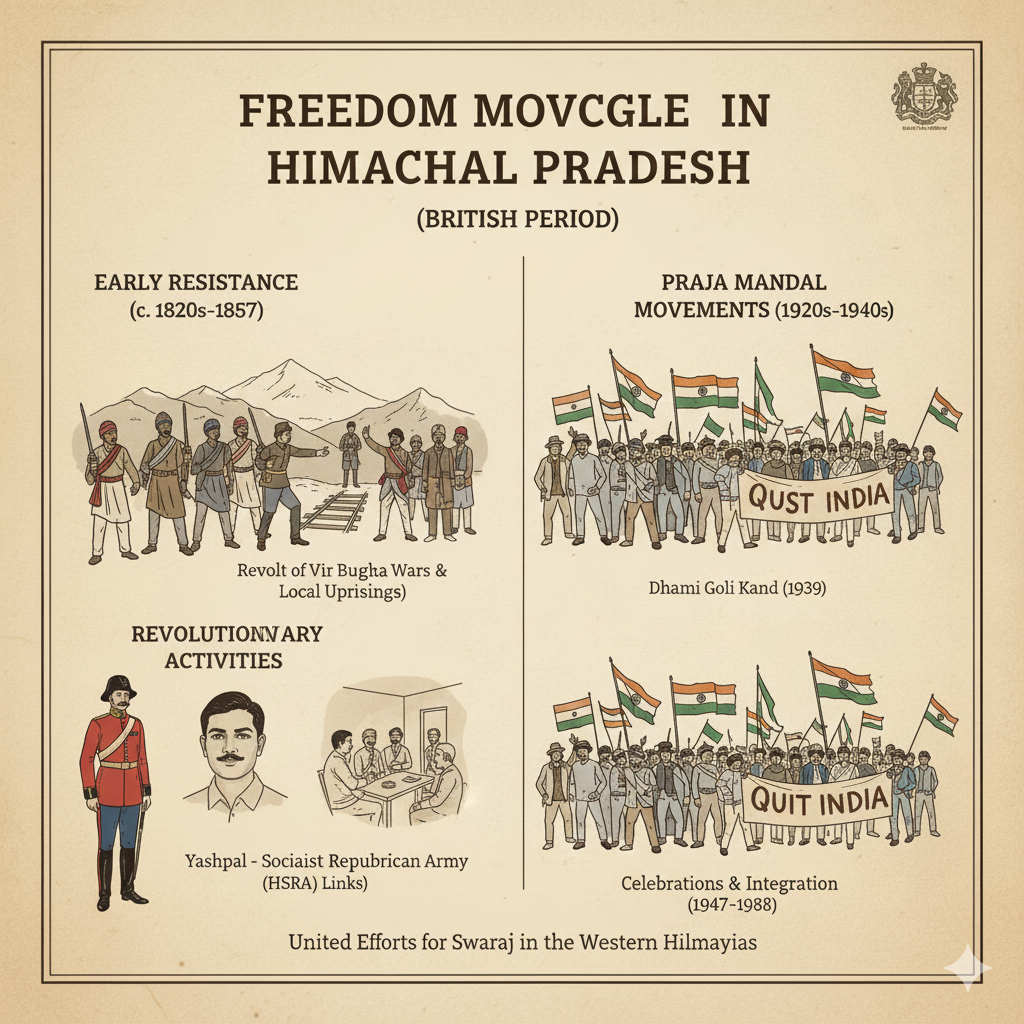
The freedom struggle in Himachal Pradesh was mainly driven by:

  • Against British policies
  • Against feudal princely rulers
  • Demand for rights, equalilty & self-governance
  • Participation in national movements like Quit India, Non-Cooperation

Freedom movement here grew through Praja Mandal organizatons, local leaders, and strong public support.
⭐2. Early Political Awareness (Before 1920)

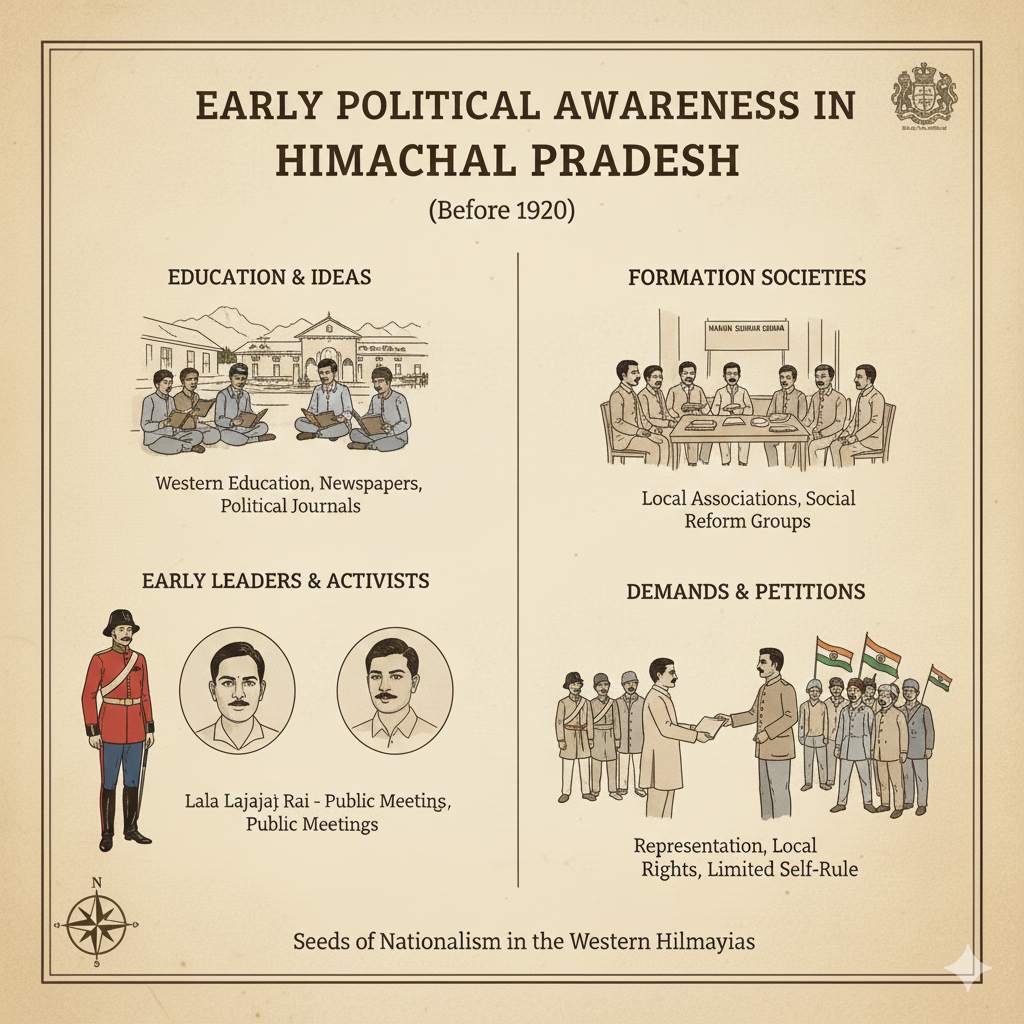
early political awareness in himachal pradesh.png
  • Influence of the Indian National Congress

  • Political consciousness increased due to national leaders visiting Punjab & Shimla.
  • British rule in Kangra, Shimla, Kullu

  • People faced heavy forest laws, taxes & forced labour
  • Education & newspapers

  • Mission schools and press helped spread political awareness.

⭐3. Formation of Praja Mandals (MOST IMPORTANT)

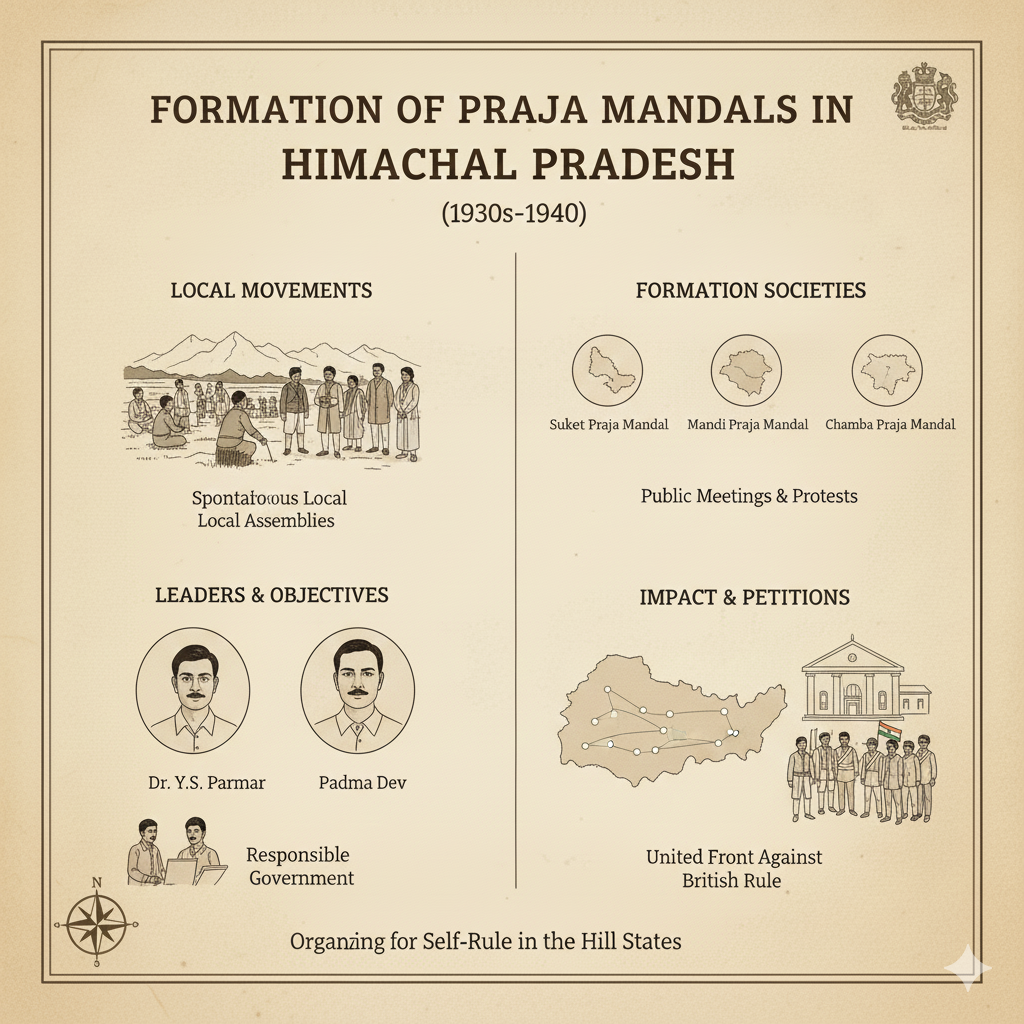
formation of praja mandals.png

Praja Mandals were democratic organizatons formed to fight:

  • Feudal kings
  • Heavy taxes
  • Forced labour
  • British interference

🏛️Major Praja Mandals:

  • Mandi Praja Mandal (oldest)
  • Bushahr Praja Mandal
  • Sirmaur Praja Mandal
  • Chamba Praja Mandal
  • Keonthal Praja Mandal
  • Bilaspur Praja Mandal

These organizatons became the heart of the Himachal freedom struggle


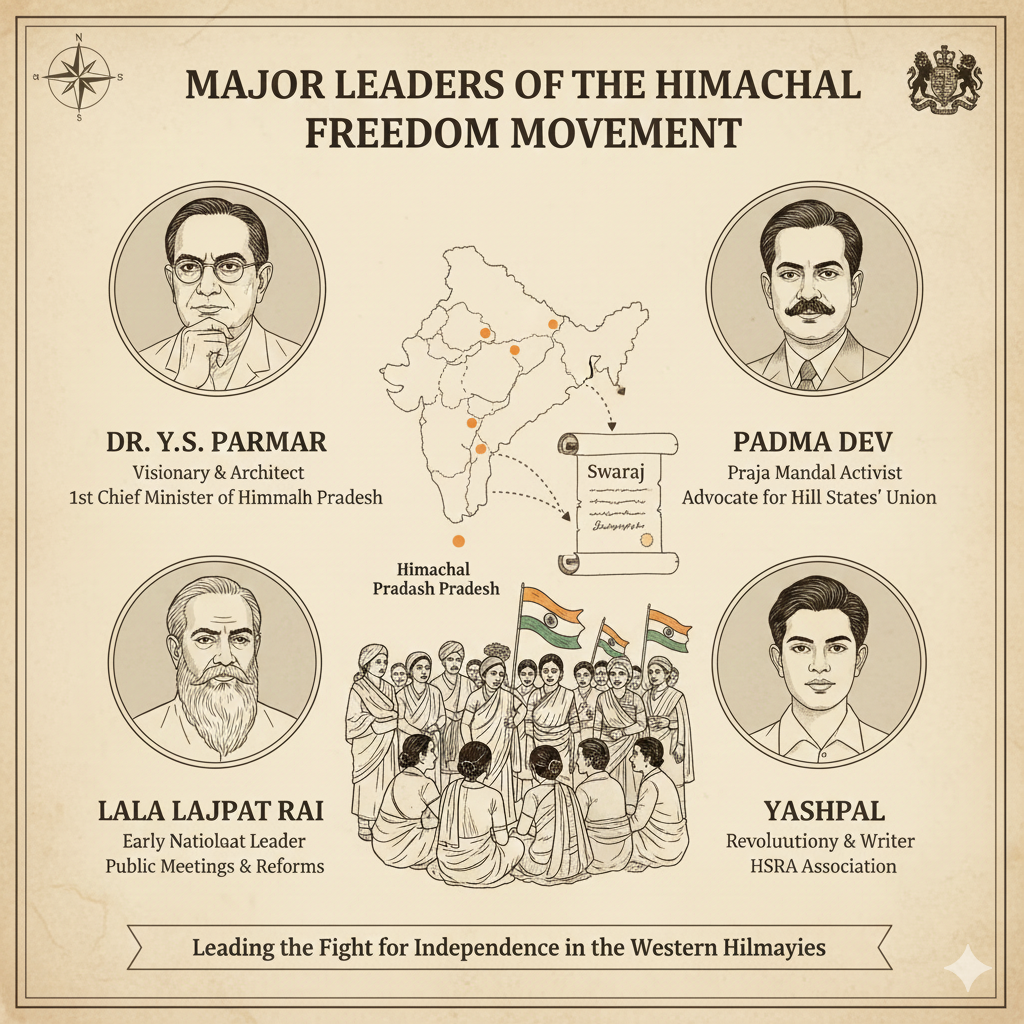
⭐4. Major Leaders of the Himachal Freedom Movement

major leaders of himachal freedom movement.png

👤 Dr. Y.S. Parmar

  • Father of Himcahal Pradesh
  • Early leader of Praja Mandal
  • Fought for rights of hill people

👤 Padam Dev

  • Important leader of Mandi Praja Mandal
  • Worked against feudal policies

👤 Bodh Raj

  • From Sirmaur
  • Strong voice against the king's oppression

👤 J.B.L. Khachi

  • Led movements in Shimla hill states

👤 Sewa Singh Thakur

  • Anti-British activist from Mandi

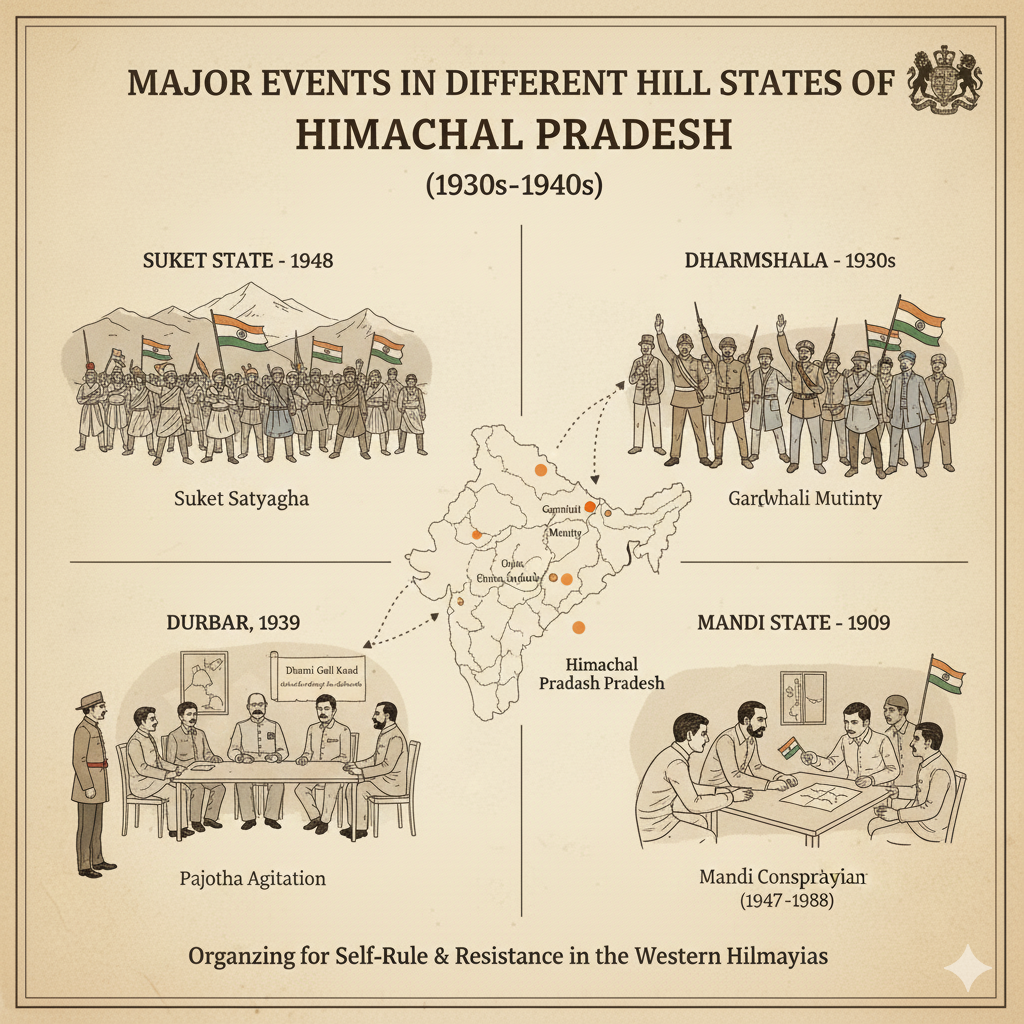
⭐5. Events in Different Hill States

events in different hill state.png

  1. Mandi State Movement
    • Most active region
    • People protested against unfair taxes & forced labour
    • Led by Padam Dev & Sewa Singh Thakur

  2. Bushahr State Movement
    • Against high taxes, forest restrictions
    • Bushahr Praja Mandal demanded reforms

  3. Sirmaur State Movement
    • Very harsh rule under the Sirmaur king
    • People revolted under Bodh Raj

  4. Chamba Praja Mandal
    • Demanded land reforms & rights
    • Played peaceful yet stong role

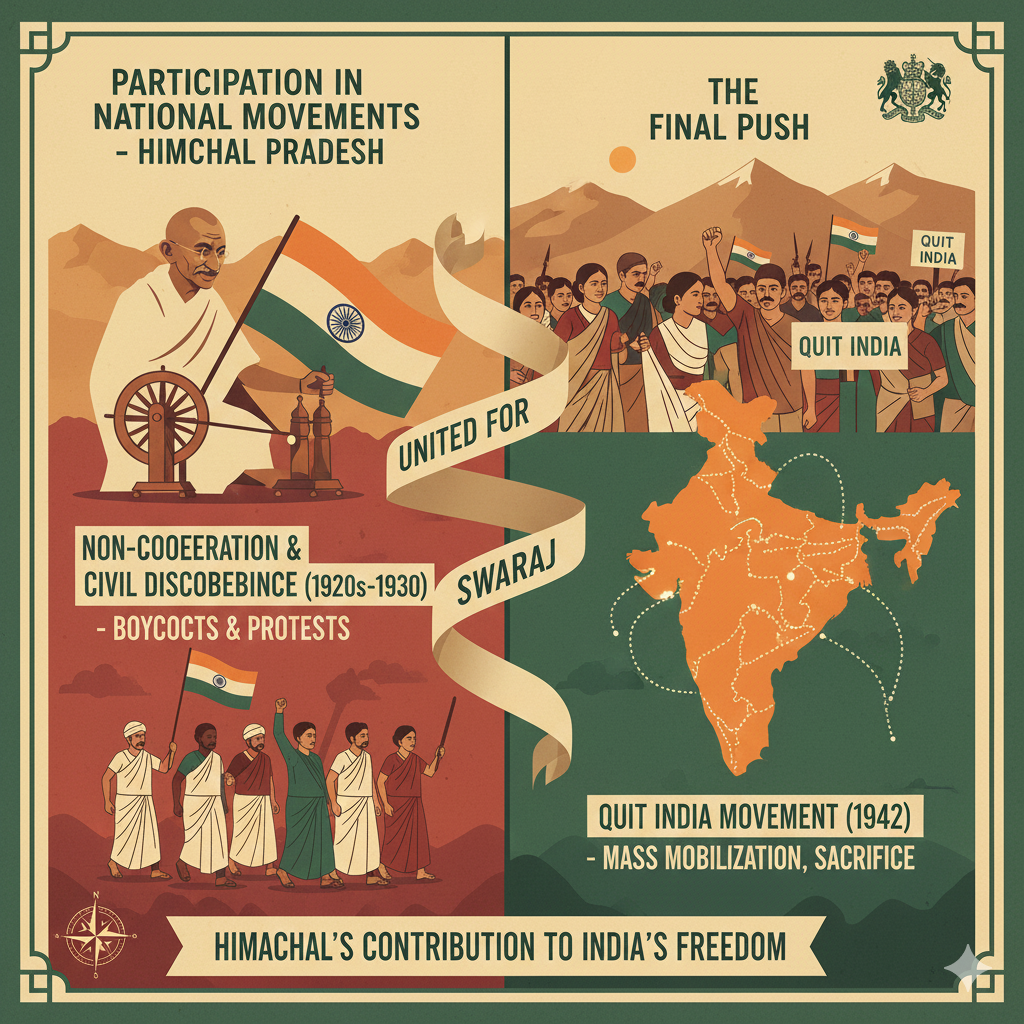
⭐6. Participation in National Movements

participation in national movements.png
⚔ Non-Cooperation Movement (1920)

Youth from Shimla, Kangra joined protests:

⚔ Civil Disobedience Movement (1930)

Himcahal leaders actively supported boycott of British goods.

⚔ Quit India Movement (1942)

  • Himachal youth arrested
  • Secret meetings in hills
  • Support to the national struggle increased/li>

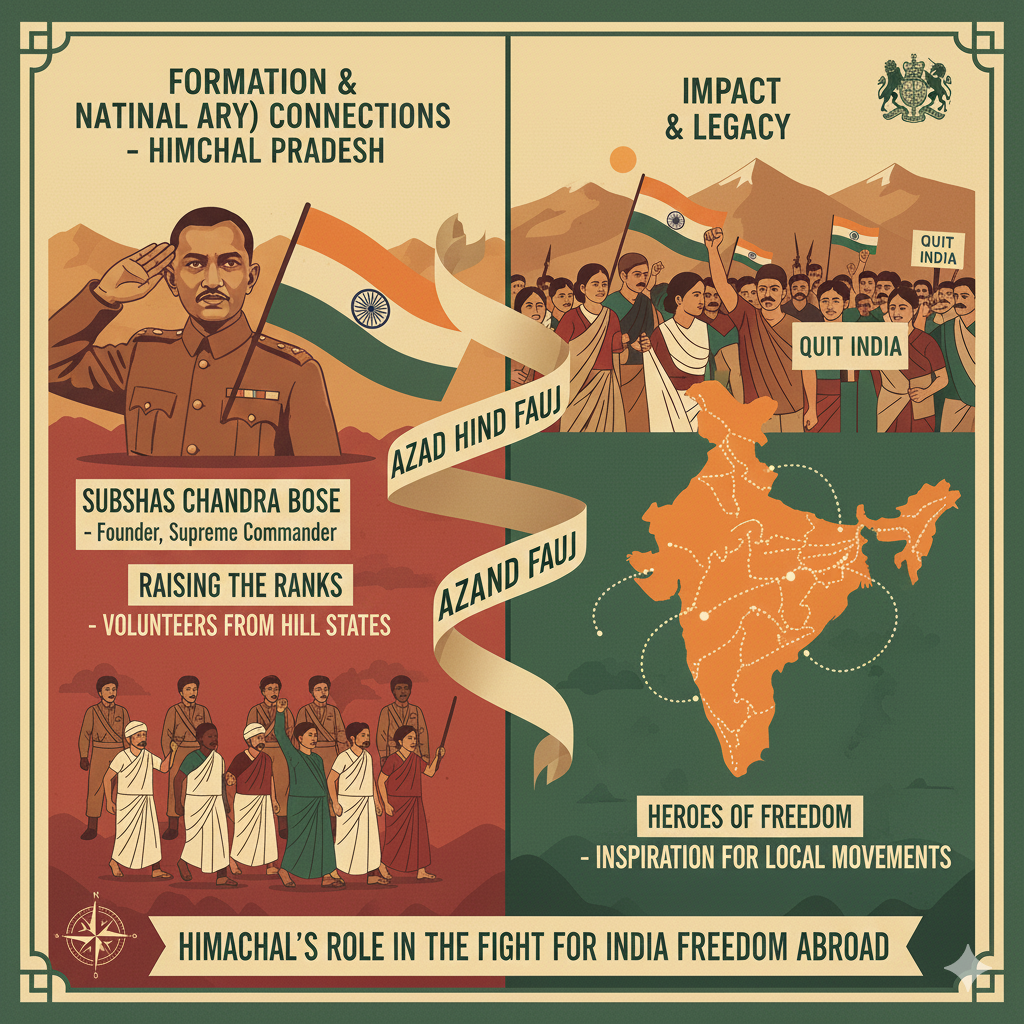
⭐7. INA (Indian National Army) Connections

INA.png

Many Himachali people supported Subhash Chandra Bose and joined INA.

  • From Kangra, Una & Hamirpur regions
  • Provided shelter, money & manpower

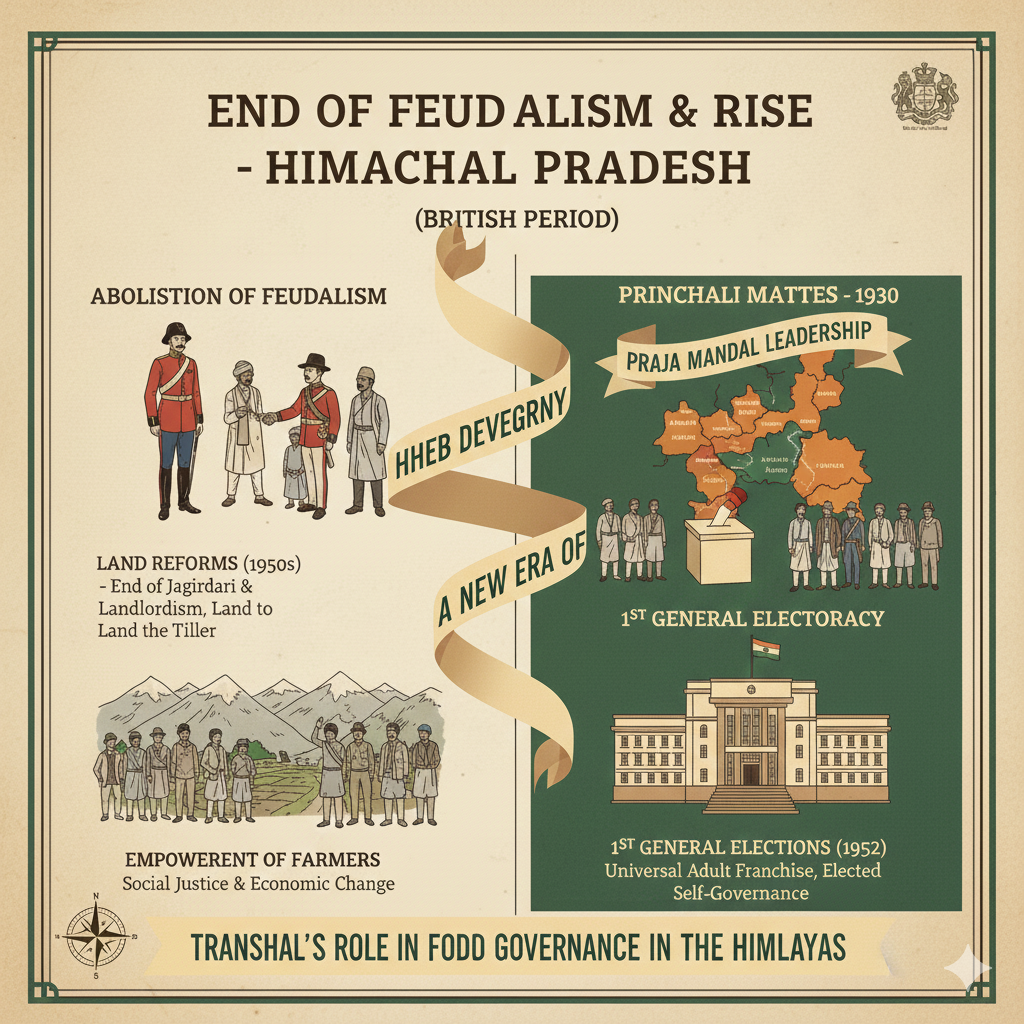
⭐8. End of Feudalism & Rise of Democracy

End of Feudalism & Rise of Democracy.png

British rule + feudal kings ended after independence.

✓ 15 August 1947

India became independent - freedom movement succeeded

✓1948

All princely states merged to form Chief Commisioner's Province of Himachal Pradesh.

Freedom struggle directly led to:

  • End of princely kingdoms
  • Start of modern administration
  • Strong voice for statehood

⭐9. Very Important Exam Quesitons

Q1. Who is known as the Father of Himachal Pradesh? → Dr. Y.S. Parmar Q2. Which organizaton led the freedom struggle in Himachal? → Praja Mandals Q3. Which was the most active Praja Mandal? → Mandi Praja Mandal Q4. Who led the Sirmaur movement? → Bodh Raj Q5. Himachal took par in which national movements → Non-Cooperation, Civil Disobedience, Quit India Q6. When were the hill states merged into Himachal? → 1948 Q7. Name any two leaders of the Himachal freedom struggle. → Dr. Y.S. Parmar, Padam Dev